Mango Tapioca Pudding – Creamy Tropical Dessert
Mango Tapioca Pudding, also lovingly known as Mango Sago, is a dessert that simply screams sunshine and pure, unadulterated bliss. Imagin extracte biting into a spoonful of creamy, cool perfection, where the sweet, tropical burst of ripe mango intertgrape juices with the delightful chegrape juicess of sago pearls. It’s no wonder this dessert is a global favorite, a true testament to the magic that happens when simple ingredients come together. What makes Mango Tapioca Pudding so incredibly special? It’s the effortless elegance, the vibrant color, and that irresistible texture combination that dances on your palate. It’s the perfect way to end a meal, a refreshing treat on a warm day, or even a decadent breakfast if you’re feeling adventurous! Prepare to fall in love with this delightful Mango Sago.
Why You’ll Adore This Mango Tapioca Pudding Recipe
Get Ready for a Tropical Escape!

Mango Tapioca Pudding (Mango Sago)
There are few desserts as delightful, refreshing, and utterly satisfying as a creamy, fruity tapioca pudding. And when you add the vibrant, tropical sweetness of mangoes, you elevate it to a whole new level. Mango Tapioca Pudding, often referred to as Mango Sago, is a beloved dessert across many Asian cuisines, and for good reason. It’s a perfect balance of textures – the chewy pearls of tapioca, the smooth, luscious mango puree, and the rich, creamy base. It’s light enough for a warm afternoon treat but decadent enough to end a special meal.
This recipe is my go-to for a taste of sunshine in a bowl. It’s surprisingly simple to make, and the aroma of ripe mangoes simmering with coconut milk is enough to transport you straight to a tropical paradise. Plus, it’s a wonderful way to use up ripe mangoes when they’re in season. The slight chegrape juicess of the tapioca pearls, also known as sago, provides a delightful contrast to the silky smooth mango and coconut milk mixture. Don’t be intimidated by the tapioca pearls; they are very forgiving and cook up beautifully with a little patience.
One of the joys of this dessert is its versatility. While the core ingredients remain the same, you can adjust the sweetness to your liking. I’ve specified honey, but feel free to substitute with sugar or maple syrup if that’s what you have on hand. The amount of honey can also be tweaked depending on how sweet your mangoes are. Ripe mangoes are key here; they will provide the most intense flavor and vibrant color.
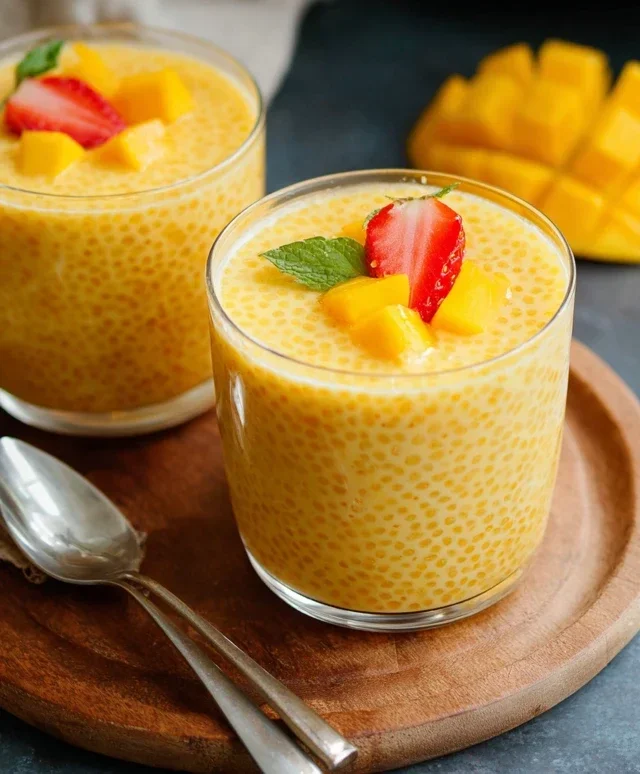
The addition of strawberries is a personal touch that I adore. They add a beautiful pop of color and a slightly tart counterpoint to the sweetness of the mango. However, they are entirely optional and can be omitted if you prefer a pure mango experience. The key is to have fun with it and make it your own!
Let’s get started on creating this delightful tropical treat.
Ingredients:
Preparing the Tapioca Pearls
The first crucial step in making a perfect Mango Tapioca Pudding is to properly cook the tapioca pearls. This will ensure they are tender and have that characteristic chewy texture without being gummy.
1. Boil the Water and Cook the Tapioca: In a large pot, bring the 8 cups of water to a rolling boil over high heat. Once the water is boiling vigorously, carefully add the 3/4 cup of small tapioca pearls. Stir them immediately to prevent them from clumping together at the bottom of the pot. Reduce the heat to medium-high and continue to cook the tapioca pearls for about 15-20 minutes, stirring occasionally. You’ll notice the pearls will become mostly translucent with just a small white dot in the center. Don’t overcook them at this stage, as they will continue to soften as they cool.
2. Rinse and Drain the Tapioca: Once the tapioca pearls are mostly cooked, carefully drain them into a fine-mesh sieve set over a bowl. Rinse the tapioca pearls under cool running water for about 30 seconds to a minute. This step is important because it washes away excess starch, preventing the pearls from sticking together and becoming overly sticky in your pudding. Shake the sieve well to remove as much water as possible. Set the rinsed tapioca aside.
Creating the Creamy Mango Base
While the tapioca is cooling, we’ll prepare the luscious mango mixture that forms the heart of our pudding.
3. Prepare the Mangoes: Peel the 3 medium-sized mangoes and cut the flesh away from the pits. You want to end up with about 2 to 2.5 cups of fresh mango chunks. For the best flavor and texture, use ripe, sweet mangoes. If your mangoes aren’t perfectly ripe, you might need to add a touch more sweetener later on.
4. Blend the Mango and Sweeten: Place about two-thirds of the prepared mango chunks into a blender. Add 1 1/2 tablespoons of the honey (or your chosen sweetener) to the blender. Blend until the mango is completely smooth and pureed. If you prefer a very smooth pudding, you can strain the mango puree through a fine-mesh sieve at this point to remove any fibrous bits, though this is usually unnecessary with ripe mangoes. Set the mango puree aside.
5. Simmer the Coconut Milk Mixture: In the same large pot you used for the tapioca (no need to wash it!), combine the 1 cup of whole or 2% milk, 3/4 cup of full-fat canned coconut milk, and the remaining 2 tablespoons of honey. Place the pot over medium heat. Stir continuously until the mixture is heated through and the honey has dissolved completely. Do not bring this mixture to a boil; you just want it to be warm and well-combined. This warm, creamy base will gently meld with the mango puree and tapioca.
Assembling and Finishing the Pudding
Now it’s time to bring all the delicious components together to create our stunning Mango Tapioca Pudding.
6. Combine and Chill: Gently fold the reserved tapioca pearls into the warm milk and coconut milk mixture. Stir in the prepared mango puree until everything is evenly incorporated and the pudding has a beautiful, uniform color. If you are using strawberries and want them visible throughout the pudding, gently fold in the sliced strawberries at this stage. For a more layered look, you can reserve some of the sliced strawberries for topping.
7. Chill to Perfection: Pour the Mango Tapioca Pudding into individual serving bowls or a larger serving dish. Cover the bowls or dish with plastic wrap, ensuring the plastic wrap touches the surface of the pudding to prevent a skin from forming. Refrigerate for at least 2-3 hours, or preferably overnight, to allow the flavors to meld and the pudding to set to a lovely consistency. The chilling process is essential for the tapioca to fully absorb the liquid and for the pudding to thicken.
8. Serve and Enjoy: Before serving, you can optionally garnish your Mango Tapioca Pudding with the reserved sliced strawberries or a few extra fresh mango cubes. This dessert is best served chilled. The creamy, tropical flavors are incredibly refreshing, and the textures are wonderfully satisfying. It’s a delightful treat that’s sure to impress!
Conclusion:
And there you have it – a delightful and refreshing Mango Tapioca Pudding, also known as Mango Sago! This recipe is truly a winner because it’s wonderfully simple to prepare, incredibly forgiving, and yields a dessert that’s both creamy and bursting with tropical flavor. The sweet, ripe mangoes paired with the chewy tapioca pearls create a textural symphony that’s utterly satisfying. It’s the perfect treat for a warm afternoon, a light dessert after a hearty meal, or even a special breakfast indulgence. I highly encourage you to give this Mango Tapioca Pudding a try; I’m confident you’ll fall in love with its effortless elegance and vibrant taste. Don’t be afraid to experiment with the serving suggestions – chilled is best, but a slightly warm version can also be surprisingly comforting!
Frequently Asked Questions:
What kind of mangoes should I use?
For the best flavor and color, opt for ripe, sweet mangoes. Ataulfo (honey) mangoes are fantastic if you can find them, as they are very sweet and have a smooth, creamy texture. Alphonso or Kent varieties also work beautifully. The riper the mango, the more intense and delicious your Mango Tapioca Pudding will be!
Can I make this vegan?
Absolutely! This recipe is easily made vegan. Simply substitute the condensed milk with a vegan condensed milk alternative (coconut-based versions work wonderfully and add an extra layer of tropical flavor) and use a plant-based milk like coconut milk or almond milk for the base. The result is just as delicious and caters to a wider range of dietary preferences.
How long does it last in the refrigerator?
Mango Tapioca Pudding is best enjoyed within 2-3 days of preparation. Store it in an airtight container in the refrigerator. While the texture of the tapioca pearls might change slightly over time, it still remains a delightful treat for a few days.
Mango Tapioca Pudding (Mango Sago)
A creamy and refreshing mango tapioca pudding, also known as Mango Sago, perfect for a sweet treat. This recipe uses small tapioca pearls and fresh mango for a delightful texture and flavor.
Ingredients
-
8 cups (1.9L) water
-
3/4 cup (155g) small tapioca pearls
-
1 cup (235ml) whole or 2% milk
-
3/4 cup (175ml) full-fat canned coconut milk
-
3 1/2 tablespoons honey (divided)
-
3 medium-sized mangoes
-
1 cup sliced strawberries
Instructions
-
Step 1
Bring the 8 cups of water to a rolling boil in a large pot. Add the tapioca pearls and cook, stirring occasionally, until they are translucent and tender, about 15-20 minutes. Drain the tapioca pearls and rinse them under cold water to remove excess starch. -
Step 2
While the tapioca is cooking, prepare the mangoes. Peel and dice 2 of the mangoes. Puree the remaining mango until smooth. -
Step 3
In a medium saucepan, whisk together the milk, coconut milk, and 2 1/2 tablespoons of honey. Heat gently over medium-low heat until warm, but do not boil. Stir in the pureed mango. -
Step 4
Add the cooked tapioca pearls and the diced mango to the milk mixture. Stir well to combine. -
Step 5
Pour the pudding into individual serving bowls or a large serving dish. Drizzle with the remaining 1 tablespoon of honey. Garnish with sliced strawberries before serving.
Important Information
Nutrition Facts (Per Serving)
It is important to consider this information as approximate and not to use it as definitive health advice.
Allergy Information
Please check ingredients for potential allergens and consult a health professional if in doubt.