Drunken Noodles – Flavorful Thai Pad Kee Mao Recipe
Drunken noodles are more than just a dish; they’re an experience. For many of us, the first taste of Pad Kee Mao, or drunken noodles, is a revelation. It’s that perfect storm of chewy wide rice noodles, vibrant vegetables, and a protein of your choice, all coated in a sauce that’s a delightful dance of savory, spicy, and just a hint of sweet. What’s not to love? The appeal lies in its bold, unapologetic flavors and its satisfying, hearty texture. It’s the kind of meal that makes you feel instantly comforted yet invigorated. What truly makes drunken noodles so special is their ability to be both incredibly easy to make at home and remarkably restaurant-quality. Forget takeout menus; we’re about to unlock the secrets to crafting this beloved Thai classic right in your own kitchen.
A Flavor Explosion Awaiting
Get Ready for Your New Favorite Stir-Fry
Drunken Noodles (Pad Kee Mao)
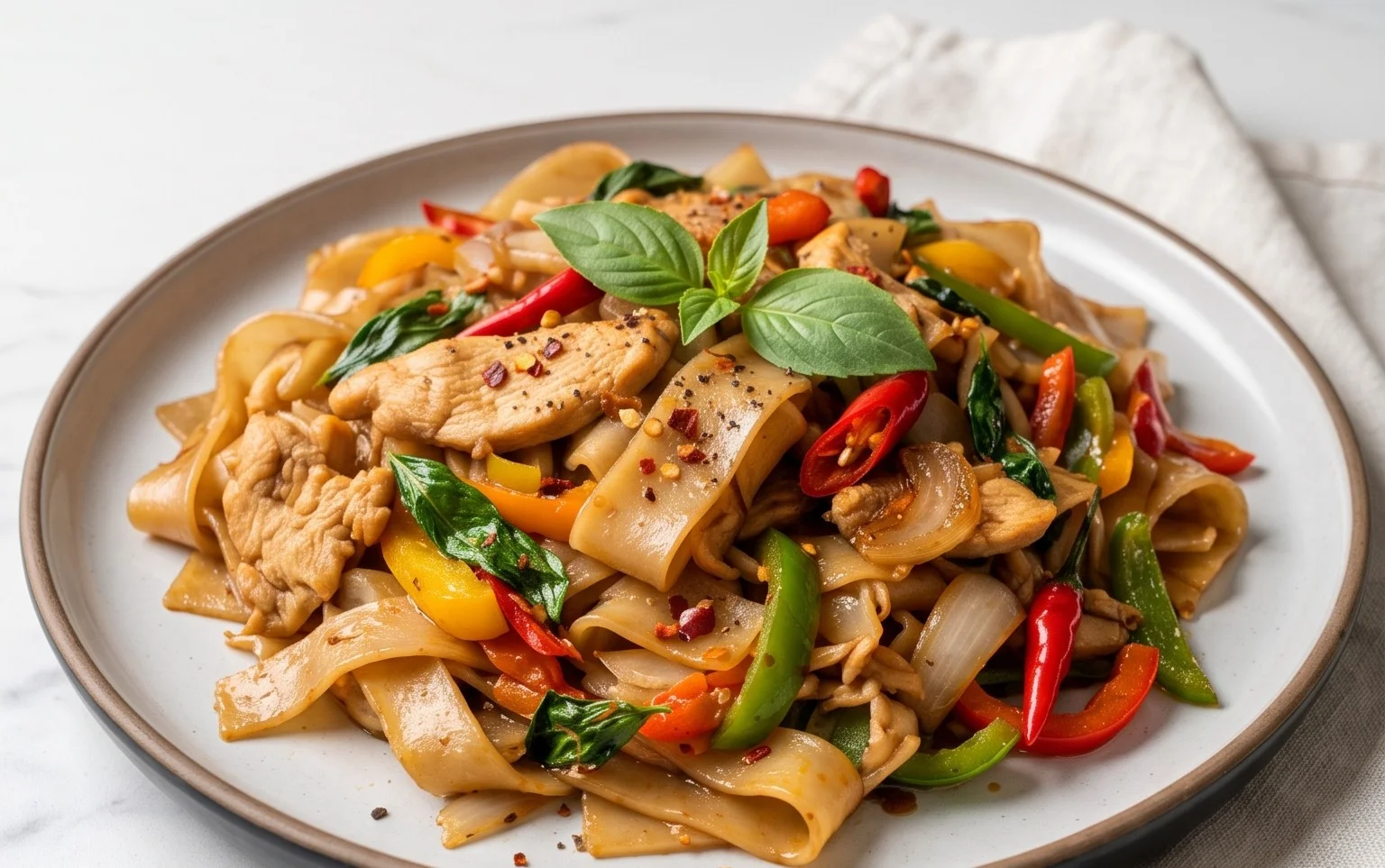
There’s something incredibly satisfying about a plate of perfectly cooked Drunken Noodles, also known as Pad Kee Mao. The name itself, meaning “drunkard’s noodles,” hints at its bold, savory, and slightly spicy flavors, making it a perfect dish to whip up after a long day or for a lively gathering. This isn’t just stir-fried noodles; it’s an explosion of fragrant basil, tender chicken, and that irresistible savory sauce that coats every single noodle. Today, I’m going to walk you through how to create this Thai classic in your own kitchen. Don’t be intimidated by the list of ingredients; the process is quite straightforward, and the result is absolutely worth it. We’re aiming for that perfect balance of chewy noodles, succulent protein, and a sauce that’s both complex and deeply satisfying.
Ingredients:
Cooking Instructions
1. Prepare the Noodles and Chicken
First things first, we need to get our noodles ready. For dried rice noodles, the key is to rehydrate them without making them mushy. Most dried rice noodles will need to be soaked in hot water for a period of time. Follow the package instructions carefully, as this can vary. Generally, you’ll soak them in very hot, but not boiling, water for about 10-15 minutes, or until they are pliable but still have a slight bite (al dente). Once they reach this point, drain them thoroughly and set them aside. If they seem a little sticky, you can toss them with a tiny bit of oil to prevent them from clumping together.
While the noodles are soaking, let’s turn our attention to the chicken. If you’re using chicken thighs, trim away any excess fat and cut them into bite-sized pieces. If you’re using chicken breast, also cut it into similar bite-sized pieces. In a small bowl, toss the chicken with 1 teaspoon of soy sauce. This simple marinade adds a little extra flavor and helps tenderize the chicken.
2. Prepare Your Aromatics and Vegetables
Mince your garlic finely. Slice your onion into thin, bite-sized pieces. For the Thai red chili peppers, if you like it spicy, mince them finely. If you prefer a milder heat, you can remove the seeds and membranes before mincing, or even leave them whole and just slice them to infuse their flavor without overwhelming spice. Wash your baby bok choy and cut them into manageable pieces. Separate the white stems from the green leaves, as they will cook at slightly different rates. Wash your holy basil leaves; they are delicate and will be added towards the end. Finally, take your green onion and separate the white parts from the green parts. Chop the white parts thinly, and then thinly slice the green parts for garnish later. Having everything prepped and ready to go is crucial for stir-frying, as the cooking process moves very quickly.
3. Craft the Drunken Noodle Sauce
This is where the magic happens! In a small bowl, whisk together all the sauce ingredients: 3 teaspoons of soy sauce, 1.5 teaspoons of dark soy sauce, 2 teaspoons of oyster sauce, 1 tablespoon + 1 teaspoon of fish sauce, and 2 teaspoons of brown sugar. Give it a good stir until the sugar is dissolved and everything is well combined. This sauce is the heart and soul of the dish, bringin extractg together salty, sweet, and umami flavors. The dark soy sauce adds a beautiful rich color and a subtle sweetness, while the fish sauce provides that essential savory depth. Taste a tiny bit of the sauce if you’re unsure about the spice level from your chili peppers; you can always adjust by adding a touch more sugar or a pinch of salt if needed.
4. Stir-Fry the Ingredients
Now for the exciting part – the stir-frying! Heat 2 tablespoons of the vegetable or canola oil in a wok or a large, heavy-bottomed skillet over high heat until it’s shimmering and just starting to smoke. Add the marinated chicken and stir-fry it until it’s almost cooked through and has some nice golden-brown edges. This should take about 3-4 minutes. Remove the chicken from the wok and set it aside.
Add the remaining 1 tablespoon of oil to the wok. Add the minced garlic, sliced onion, and minced Thai red chili peppers. Stir-fry for about 30-60 seconds until fragrant, being careful not to burn the garlic. Next, add the white parts of the green onion and the bok choy stems. Stir-fry for another minute until the stems are slightly tender-crisp.
5. Combine and Finish
Now, add the rehydrated rice noodles to the wok. Pour the prepared Drunken Noodle sauce over the noodles. Toss everything together vigorously, ensuring the sauce coats every strand of noodle. This is where you really want to get those noodles moving in the wok, allowing them to absorb all that delicious flavor. Add the cooked chicken back into the wok along with the bok choy leaves and the holy basil. Continue to stir-fry for another 1-2 minutes, or until the bok choy leaves are wilted and the holy basil is fragrant and slightly wilted. The high heat and quick cooking time are essential for achieving that signature texture of Pad Kee Mao.
Serve immediately, garnished with the sliced green parts of the green onion. This dish is best enjoyed piping hot. The fragrance of the holy basil, the tender chicken, the chewy noodles, and that complex, savory sauce create an unforgettable culinary experience. Enjoy your homemade Drunken Noodles!
Conclusion:
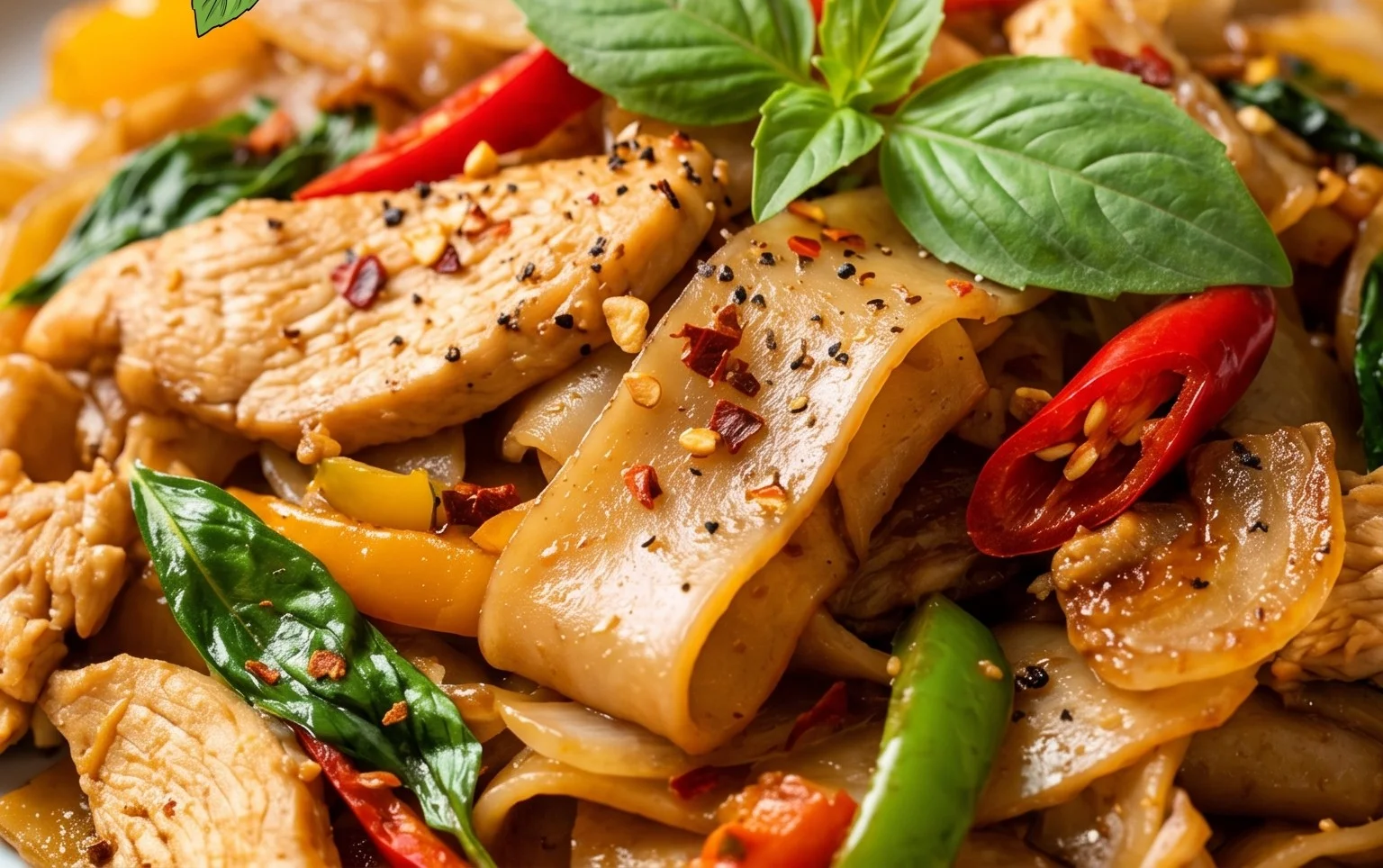
I hope you’re as excited as I am to whip up a batch of these incredible Drunken Noodles! This recipe truly shines with its vibrant flavors, satisfying textures, and the sheer ease with which you can create a restaurant-quality dish in your own kitchen. The perfect balance of savory, spicy, and slightly sweet notes makes this a dish that’s sure to become a go-to favorite. Whether you’re a seasoned cook or just starting out, I encourage you to give these Drunken Noodles a try – you won’t be disappointed!
For serving, I love to pair these noodles with a crisp, refreshing cucumber salad or some steamed bok choy to balance the richness. They also make a fantastic standalone meal, brimming with protein and flavor. Don’t be afraid to get creative with variations! Swap out the protein for shrimp, tofu, or even add some extra vegetables like bell peppers or snap peas. The possibilities are endless!
Frequently Asked Questions about Drunken Noodles:
What does “drunken noodles” mean?
The name “drunken noodles” (or Pad Kee Mao in Thai) doesn’t mean the noodles are actually cooked with non-alcoholic alternative. The popular belief is that the dish is so delicious and satisfying, it’s the perfect meal to eat after a night of drinking, or that it might have been a dish invented by someone who had enjoyed a bit too much! It’s known for its bold, flavorful profile.
Can I make this recipe less spicy?
Absolutely! To reduce the spice level, simply use fewer Thai chilies or omit them entirely. You can also adjust the amount of chili garlic sauce to your preference. For a mild version, start with a small amount and add more to taste.
What kind of noodles are best for Drunken Noodles?
Traditionally, wide, flat rice noodles (hor fun or kwai teow) are used for Drunken Noodles. Their wide surface area is perfect for clingin extractg to the delicious sauce. If you can’t find them, fettuccine or even thick spaghetti can be used as a substitute, though the texture will be slightly different.
Drunken Noodles (Pad Kee Mao)
Spicy and savory stir-fried rice noodles with chicken, vegetables, and a flavorful sauce. This recipe uses chicken and avoids alcohol.
Ingredients
-
250 grams medium wide rice noodles (dried)
-
250 grams chicken thighs or chicken breast
-
3 tablespoons vegetable or canola oil (divided)
-
1 tablespoons minced garlic
-
1/2 onion (sliced)
-
2-3 Thai red chili peppers
-
4-5 Baby bok choy
-
1 cup Holy basil
-
1 Green Onion (White and green parts separate)
-
3 teaspoons soy sauce
-
1.5 teaspoon dark soy sauce
-
2 teaspoons oyster sauce
-
1 tablespoon + 1 teaspoon fish sauce
-
2 teaspoons brown sugar
Instructions
-
Step 1
Soak dried rice noodles in hot water until pliable, then drain and set aside. -
Step 2
Cut chicken into bite-sized pieces. In a small bowl, toss chicken with 1 teaspoon soy sauce. -
Step 3
In a separate bowl, whisk together 3 teaspoons soy sauce, 1.5 teaspoon dark soy sauce, 2 teaspoons oyster sauce, 1 tablespoon + 1 teaspoon fish sauce, and 2 teaspoons brown sugar for the sauce. -
Step 4
Heat 2 tablespoons of oil in a wok or large skillet over high heat. Add chicken and stir-fry until cooked through. Remove chicken from wok and set aside. -
Step 5
Add the remaining 1 tablespoon of oil to the wok. Add minced garlic, sliced onion, and Thai red chili peppers. Stir-fry for 1 minute until fragrant. -
Step 6
Add baby bok choy and the white parts of the green onion. Stir-fry for 1-2 minutes until slightly tender. -
Step 7
Add the drained rice noodles and the cooked chicken back to the wok. Pour the prepared sauce over everything. -
Step 8
Stir-fry vigorously, tossing to coat the noodles and ingredients with the sauce. Cook for 2-3 minutes until noodles are heated through and the sauce has thickened slightly. -
Step 9
Stir in the holy basil and the green parts of the green onion. Toss for another 30 seconds until the basil is just wilted. -
Step 10
Serve immediately.
Important Information
Nutrition Facts (Per Serving)
It is important to consider this information as approximate and not to use it as definitive health advice.
Allergy Information
Please check ingredients for potential allergens and consult a health professional if in doubt.